A Tribe of Israel

|
I like to call this branch of the Vingoe family the "Tribes of Israel" because, as can be seen from the main tree, the family moved extensively within the United Kingdom and have also put down roots in Australia, New Zealand, South Africa, Canada and the USA. I have chosen to follow the American story, because it gives an in depth insight into the many wanderings of this branch of the family. Let us start the story with Israel Vingoe whose family tree we have traced back to John Vingoe who was born around 1580 in the reign of Queen Elizabeth I of England. You can find this tree by going HERE and clicking on "Israel 1790" in the index. Israel was born and baptised at Sennen Parish Church on 21 March 1790, the 12th child of James Vingoe and his wife Amy Courtney. His early life was spent on the borders of the parishes of Sennen and St Just, where his father was a farmer, fisherman and a miner too. The family lived within the small settlement of Escalls, where countless generations of this line of the Vingoe family had lived since the late 1600's. Israel married Jenifer CLEMENCE in her home parish of St Buryan in May 1826 : she was just nineteen. The first record we have of Israel and his family, other than the parish registers, is the 1841 census. The family are shown as living in St Just Churchtown which was to be their home until Israel died in 1877. On his death certificate his age was given as 90. Israel Vingoe 47 Ag Lab Jenifer Vingoe 34 Israel Vingoe 14 Agricultural Labourer Elizabeth Vingoe 13 Caroline Vingoe 12 Maria Vingoe 5 James Vingoe 3 John Vingoe 2 months We will follow the line of his son Israel, age 14 on the 1841. He was baptised on 12 November 1826 Sennen just six months after his parents marriage and he followed his father into the farming life. He possibly assumed that there was some prospect of inheriting some land and a share in a dairy business from his bachelor uncle, William Vingoe of Escalls. William, with no wife or family, would in all probability pass his land on to his brothers and thereby young Israel could continue in the family tradition. This was not to be as fate inevitably took a hand. William VINGOE died unmarried in 1845 and a will was produced, in which he left a few small legacies and annuities to his Vingoe siblings, payable out of his Escalls property rents. He also stated that "The rest of my freehold and leasehold estate situate in Escalls and all other real and personal estate and effects, money and securities for money, goods, chattels, estate and effects of what nature or kind whatsoever and wherever situate lying and being of which I shall die possessed or become entitled unto at my death, I give, devise and bequeath the same and every part thereof ,unto my nephew, Richard Nicholls of the parish of Germoe in the said county, shopkeeper................" William's intentions were apparently clear in this will written 08 December 1842 Tredinnick, Gulval. He had moved from Escalls in early 1842 to live with his widowed sister, Grace NICHOLLS. He perhaps come under the influence of her son Richard NICHOLLS, and also perhaps her son- in -law, William LAWRY, both beneficiaries under this will . Israel Vingoe and the rest of the family produced a later will dated 01 Sep 1843 at the hearing in the Archdeaconry Court of St Buryan but Israel's lawyer failed to prove this second will was legitimate. The court declared: "that the second pretended will of the said deceased bearing the date the first day of September one thousand eight hundred and forty three, in which the said Israel Vingoe is pretended to be one of the Executors, to be null and void and invalid to all intents and purposes and to have no force or validity in law whatsoever....." This decision was declared in the Parish Church of St Mary's, Penzance on 19 March 1845 & Richard NICHOLS was granted probate on 03 April 1845.There does seem to be a degree of haste involved in these proceeding as William Vingoe only died in St Just on 16 Mar 1845! The validity of the earlier will of 1842 was further contested by the Vingoe family in the Civil Courts. They eventually won their case in 1848 and the proceedings were reported extensively in the 'West Briton'. William was proved to be suffering from a form of dementia in his final years. He had been removed from Gulval into the care of his brother Israel in St Just in June of 1843 due to the deterioration of his mental state. He did, however, according to the medical witnesses presented, have periods of lucidity and, it was deemed by the Jury, that he had made the later will of 01 Sep 1843 during one of these episodes. The Jury found for Israel and his other Vingoe kin, who were the plaintiffs. What had happened to the property and finances in the meantime I have yet to find out but, as can be seen from the rest of this article, times were bad and many left Cornwall for good in the ensuing years never to return. Go to the link below to see details of the Escalls land holdings of William Vingoe, the subject of the disputed will, and the 'Report of the Civil Court Proceedings' as it appeared in the West Briton of 07 April 1848. The Second Disputed Will - extracts from the West Briton of the later Court case of 1848. We also recently found the reports of the same case in Royal Cornwall Gazette.
In May 1855 another son George Hocking, was born but the family was soon to suffer a year of heartbreak that was to split up this little family forever. First came the death grandmother mother Jennifer, who was buried on the 07 May. There was a brief period of respite when another son, Nicholas Hocking was baptised 13 May, but only a week later his father Israel himself died and was buried on 30 May 1858. Before the year was out infant son Nicholas H was also dead and by 1860 widow Mary Vingoe had married James Foss. 08 Mar 1860 by Banns St Just James FOSS age 20 Miner of Churchtown Father William FOSS Farmer. Mary VINGOE age 36 widow of Churchtown Father Nicholas HOCKING Witnesses: Samuel Veal & William Curnow On the 1861 census Mary as living with her new husband, her mother and her only surviving sons, Israel and George H, at Church Town.
James Foss
Head Mar 24, Copper Miner Penzance It is interesting to note that both Mary & James have different ages to those shown at the time of their wedding. I have no idea what happened to Mary and her new husband James FOSS, or to his elder brother Israel. They are not listed on the 1871 anywhere in Cornwall and neither have I found any trace of them in the UK on the 1881. It's possible they emigrated to Cumberland where several members of the family were working in the time period 1870-1900. Son Israel being that much older may have gone elsewhere on his own. Her other son, George Hocking Vingoe, remained behind in St Just with his Aunt Louisa ROWE [his mother Mary's sister] and her husband John Rowe, a mine agent and engineer with a large family of sons. Young George was training to be a blacksmith. 1871 Census Lafrowda Terrace, St Just Churchtown ROWE, John Head M 55 Mine Agent St. Just [b1816 - d 1907 age 91 St. Just] ROWE, Louisa Wife M 55 - St. Just [b1816 - d 10 Jan 1882 age 66: bur 16 Jan 1882 St. Just] ROWE, Geo. H Son U 25 Mine Eng. Driver 1846 St. Just [b1846 - died 1890 age 44] ROWE, Almond Son U 23 Mine Eng. Driver 1848 St. Just ROWE, Wm Son U 19 Mine Eng. Driver 1852 St. Just ROWE, Harriet Dau U 17 - 1854 St. Just [marr Phillip FRIGGENS 1876 St Just] ROWE, Rd Son U 15 Mine Eng. Driver 1856 St. Just ROWE, James Son - 13 Scholar 1858 St. Just [died in India 13 March 1885 aged 26 years.] VINGOE, Geo H Nephew U 16 Blacksmith 1855 St. Just 27 Dec 1876 St Just Marriages Philip FRIGGENS 22 bachelor Miner of Churchtown [father Andrew Friggens] Harriet ROWE 23 spinster of Churchtown [father John Rowe Engineer] Witnesses: William Merrifield & John Rowe 1881 census John & Louisa ROWE living at Lafrowda Terrace, St Just Churchtown with daughter Harriet FRIGGENS and her 2 children, Harriet Louisa 1878: Phillip Henry 1880 Louisa Rowe was to die soon after this census. PHOTO MI in St Just Wesleyan Chapel Cemetery. In affectionate remembrance of LOUISA the beloved wife of John ROWE M.I.C.E. who died January 10th 1882 aged 66 years Blessed are the dead who die in the Lord also of James their son who died in India March 13th 1885 age 26 years also of George Hocking their son who died April 29th 1890 age 44 years. also of the above named John Rowe M.I.C.E. who died May 7th 1907 age 91 years His end was peace 1891 census John ROWE still living at Lafrowda Terrace, St Just Churchtown with his daughter Harriet and her 4 children: Harriet Louisa 1878: Phillip Henry 1880 :George 1883 & Frank 1889 all born St Just . 1901 census By this time Harriet and her four children are still living with her father. She is a widow. No information on the fate of her husband, Philip FRIGGENS.In the late 1860's St Just was a place of great depression. The local newspaper reported:
West Briton 17 May 1867. During the last twelve months, Cornish miners to the number of 7,380 have left the county, 1,155 of whom settled in America, 670 in Australia and New Zealand, 450 in California, while the iron mines of Scotland and the coal and iron mines of the North of England have absorbed 1,090; 1,390 have left Gwennap, Stithians, Illogan and Phillack; 1,590 the district of Lelant, St Ives and St Just; 80 Wendron and Sithney; 205 the district of St Agnes and Perran; 220 the district of St Austell; and 1,200 the district the districts of Liskeard and Callington, The returns from other districts are not so correctly ascertained, but must fall little short of 2,000.
At Wheal Owles meeting on Friday last, Mr R Boyns has beheld a sight a day or two ago he had never seen before, and one he hoped he would never see again in St Just. On his way to Hayle, this side of Penzance, he had overtaken 15 women – all on their way to the workhouse. He knew the faces of many and believed that genuine penury had driven them to seek parish relief. George Hocking Vingoe moved north to Cleator Moor, Cumberland and in 1879 he married. Marriages Sep 1/4 1879. GRO Ref: Cockermouth 10b 674 George Hocking VINGOE to Margaret ARMSTRONG
George H Vingoe Head Married 25 St Just Cornwall Engine Driver (Rail) Margaret Vingoe Wife Married 21 Workington, Cum. George E Vingoe Son - 4 mo. Workington, Cum. ------------------------------------------------------------------------------------------------------------ The 1881 census shows George H Vingoe working as a Railway Engine driver. He may have been employed by the London and North Western Railway Company (LN&WR) who operated the lines in and out of Workington. On the left is a photo of the type of Locomotive used on the line at that time. An engine driver in a mine was a skilled job and well paid; transfer to an engine driver on the railways was often a natural progression. Railway companies were often expanding and looking for skilled engineers to drive their new passenger trains.
Between 1880 and 1887 George H. and Margaret had two daughters, Margaret & Mary Louisa and two sons, George Ernest & Almond, this later being a favourite name of the ROWE family of St Just, in which George H Vingoe was brought up after the death of his father Israel. George E. Vingoe [1880] was apprenticed to the butchery trade and was shown on the 1901 census as being a Pork Butcher age 20, living with his mother Margaret. Also in the home is sister Margaret age 17 : I do not know where sister Mary Louisa [c1885] or brother Almond [c1887] were at this time -possibly already in the USA. Sometime after 1887 George Hocking Vingoe went mining in Bendigo, Australia. He never returned to his wife and family. I am not sure if they were ever aware that he had a second family. He and his 2nd wife are both listed in the Death Registers and also in the Australian Voters List for 1901. He apparently had more children by this lady [Catherine Jane ] before his first wife Margaret died in 1909. The mother of these children later officially became his second wife. This must have been quite a common occurrence with many a Cornish miner who settled overseas and never returned home! They are both buried in Bendigo: George Hocking Vingoe in 1910 and Catherine Jane Vingoe in 1944. George's children did not follow him to Australia. Ellis Island, USA, immigration records show this entry on the passenger manifest of the "Campania", which sailed from Liverpool on the 24 June, 1911. Amongst the passengers were a group from Workington, Lancashire. Although the surname appears as 'Vingae' this name is definitely Vingoe. [The 'o' & 'e' metal type faces often got blocked up with carbon!] Number Name Gender Age Married Ethnicity Place of Residence 0002. Vingoe, George E. M 30y M England-English Workington 0003 Vingoe, Ellen F 28y M England-English Workington 0004 Vingoe, Elsie F 6y S England-English Workington 0005 Vingoe, George M 3y S England-English Workington 0006 Vingoe, Almond M 23y S England-English Workington
The Cunard Ship Campania
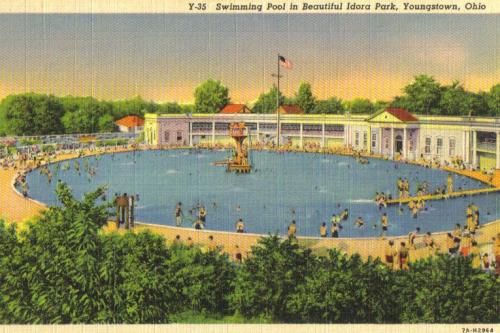
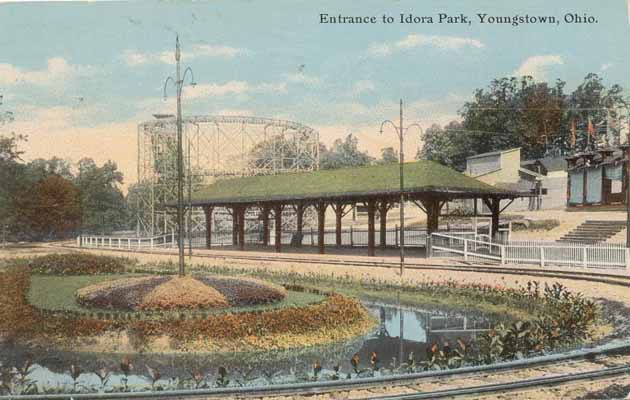
The Campania was built by Fairfield Shipbuilding & Engineering Company, Glasgow, Scotland in 1893. She was 12950 gross tons with a length of 622 feet long and was 65 feet wide. The ship carried 2000 passengers ( 600 first class, 400 second class, 1000 third class ). She sailed on the Liverpool-New York route until she was sold to the British Admiralty at the start of the First World War in 1914 and renamed HMS Campania. The original manifest shows that they were going to stay with their sister Mrs Louisa Eggleston at 137 Baldwin St, Youngstown, Ohio. This was a steel town and it was probably the attraction of jobs in the mills that had persuaded the brothers to follow their sister and her husband, who had left the previous year. George and his family, together with brother Almond travelled on to the home of [Mary] Louisa & William Eggleston. They gave as their address in England that of their sister Mrs Sloan. This was Margaret Armstrong Vingoe who had married Joseph William Sloan in 1905. It would not have been long before a postcard similar to these showing the famous Idora Park would have been on its way to England to tell their sister that they had all arrived safely. Their mother Margaret had died sometime in the Dec 1/4 of 1909.
Mary Louisa Eggleston and her daughter, Margaret were to visit England again in 1914 just before the outbreak of WWI. Ellis Island records confirm her return to the US in November of that same year. Her descendants still live in Buffalo, New York. George E Vingoe also returned to UK before 1920 and he was not listed on the US census for that year. He appears on the 1930 UK census as a butcher. His descendant were still butchers in Warrington until very recently. Almond Vingoe was naturalised as US citizen in 1918 and returned to UK as a US Serviceman. At some point before returning to the US on the "Carmania" in Feb 1921 he changed his name to Albert. In about 1922 he married Jennifer FRY, who already had a son named George. They had a son together in 1924 whom they named Albert E. During WW2 Almond/Albert b1887 was taken ill and died, but son Albert E was not allowed compassionate leave from the US Military Services as they were just about to invade Japan. Albert E Vingoe [jnr.] died 10 Oct 2007 Age 83. His descendants still live in Buffalo, N.Y. The family is listed on the 1930 US census in Buffalo Erie New York. 1930 US FEDERAL CENSUS
Albert VINGOE
Buffalo, Erie, NY c 1889 England Head The George Vingoe c1913 was the son of Jennifer FRY who married Almond/Albert and a half brother to Albert E c 1925
|
GP. Web Design
 Israel
Vingoe [b1826] married Mary Hocking, the daughter of a St Just miner,
Nicholas Hocking. The marriage took place at St Just on the 02
September 1851. A year later their son Israel, was baptised at the Bible
Christian Chapel in St Just but within three months this
child had died. In 1853 Israel and Mary had another child whom again they named
Israel but they do not appear to have had this child baptised. This often
happened with children with the same name as the one who had died.
Israel
Vingoe [b1826] married Mary Hocking, the daughter of a St Just miner,
Nicholas Hocking. The marriage took place at St Just on the 02
September 1851. A year later their son Israel, was baptised at the Bible
Christian Chapel in St Just but within three months this
child had died. In 1853 Israel and Mary had another child whom again they named
Israel but they do not appear to have had this child baptised. This often
happened with children with the same name as the one who had died. In
the early 19th century large deposits of Haematite [iron ore] were
discovered in the Cleator Moor and Egremont districts of West Cumberland
and by the 1840's they were being rapidly exploited. Railway lines were
constructed by the Whitehaven, Cleator and Egremont Railway running from
Whitehaven to Cleator with branches to Sellafield and Distington to
carry the ore. An extended network was opened in 1861 to
carry iron ore and coal from all the nearby mines and this was later to
also carry passengers when it was extended to meet the Cockermouth and
Workington Railway at Marron Junction. The Whitehaven, Cleator and
Egremont Railway was taken over in February 1878 by the
London & North Western & Furness Companies. As George H Vingoe was
about set to marry his Margaret it's likely he went to
work for this company. A photo of a
handsome young man in the a uniform of the LN & WR came to light in
the possession of a descendant of Mary Louisa VINGOE: He has
turned out to be a member of the SLOAN family. Margaret
Armstrong Vingoe married Joseph
William SLOAN in 1905.
In
the early 19th century large deposits of Haematite [iron ore] were
discovered in the Cleator Moor and Egremont districts of West Cumberland
and by the 1840's they were being rapidly exploited. Railway lines were
constructed by the Whitehaven, Cleator and Egremont Railway running from
Whitehaven to Cleator with branches to Sellafield and Distington to
carry the ore. An extended network was opened in 1861 to
carry iron ore and coal from all the nearby mines and this was later to
also carry passengers when it was extended to meet the Cockermouth and
Workington Railway at Marron Junction. The Whitehaven, Cleator and
Egremont Railway was taken over in February 1878 by the
London & North Western & Furness Companies. As George H Vingoe was
about set to marry his Margaret it's likely he went to
work for this company. A photo of a
handsome young man in the a uniform of the LN & WR came to light in
the possession of a descendant of Mary Louisa VINGOE: He has
turned out to be a member of the SLOAN family. Margaret
Armstrong Vingoe married Joseph
William SLOAN in 1905.